Sachet and sealing selection
Compare VFFS, pre-made pouch and other seal routes.

Sachet and pouch machinery
A sachet project combines dosing and pack making. Product behaviour, the required pack dimensions, film structure, seal area, print registration and downstream handling all influence whether vertical form-fill-seal or a pre-made pouch route is more appropriate.
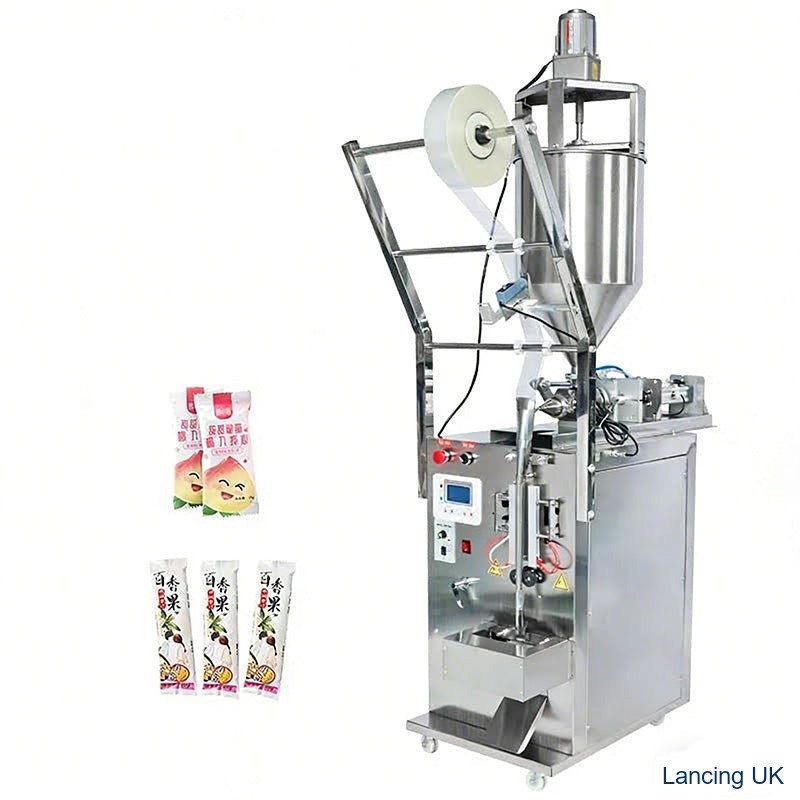
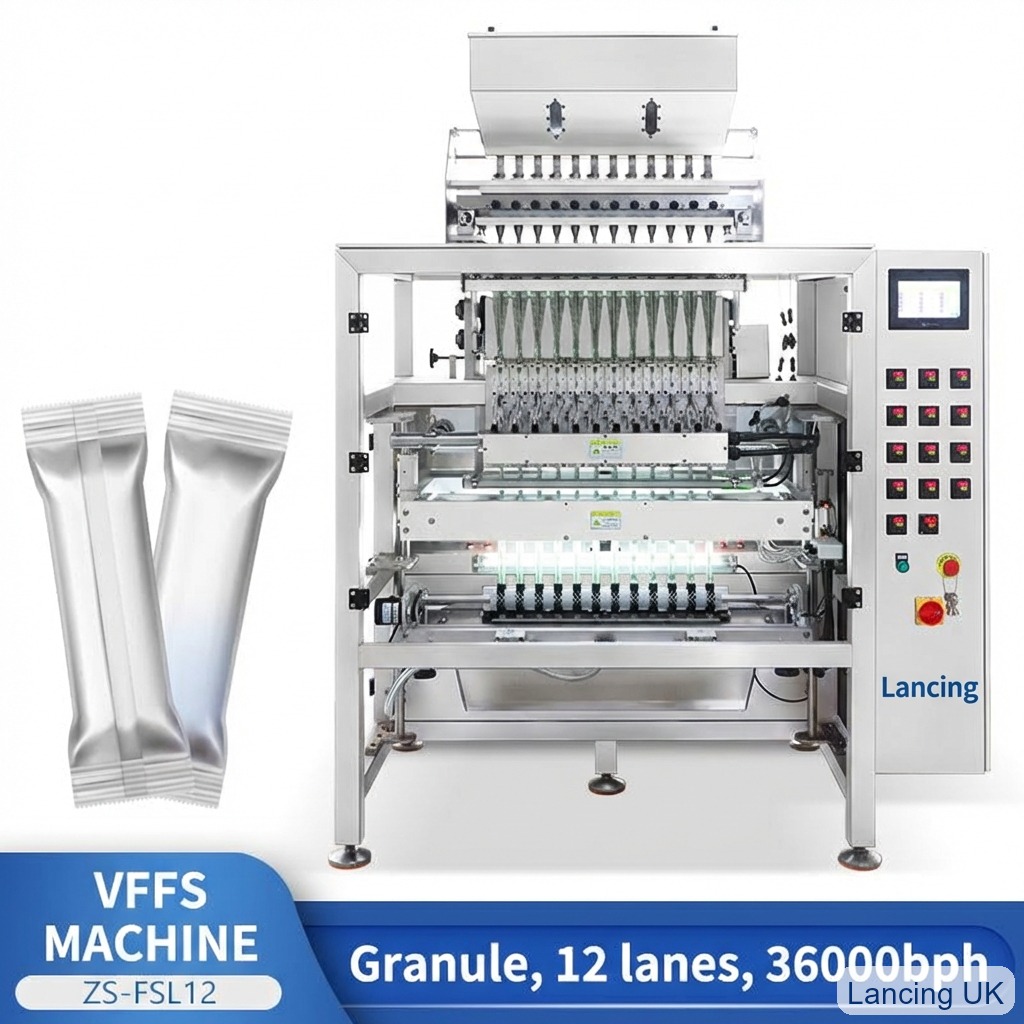
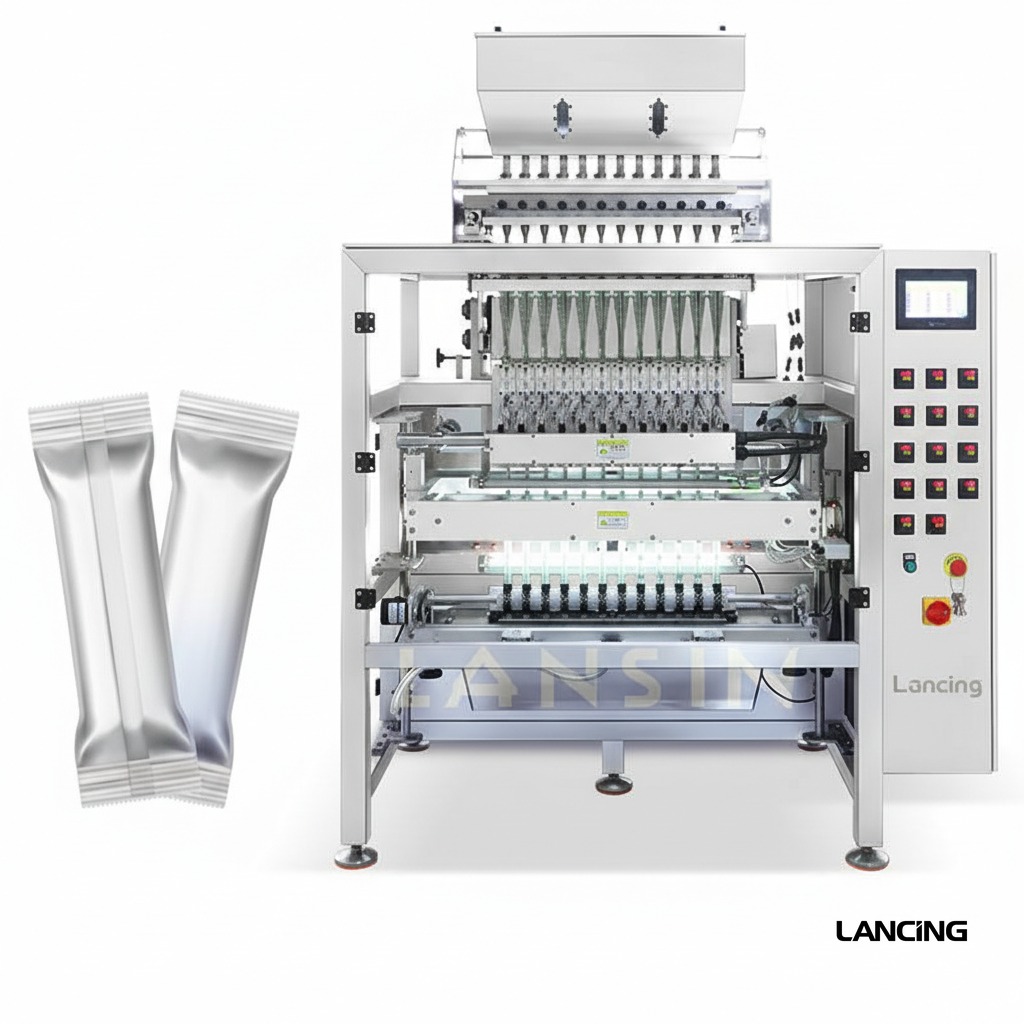
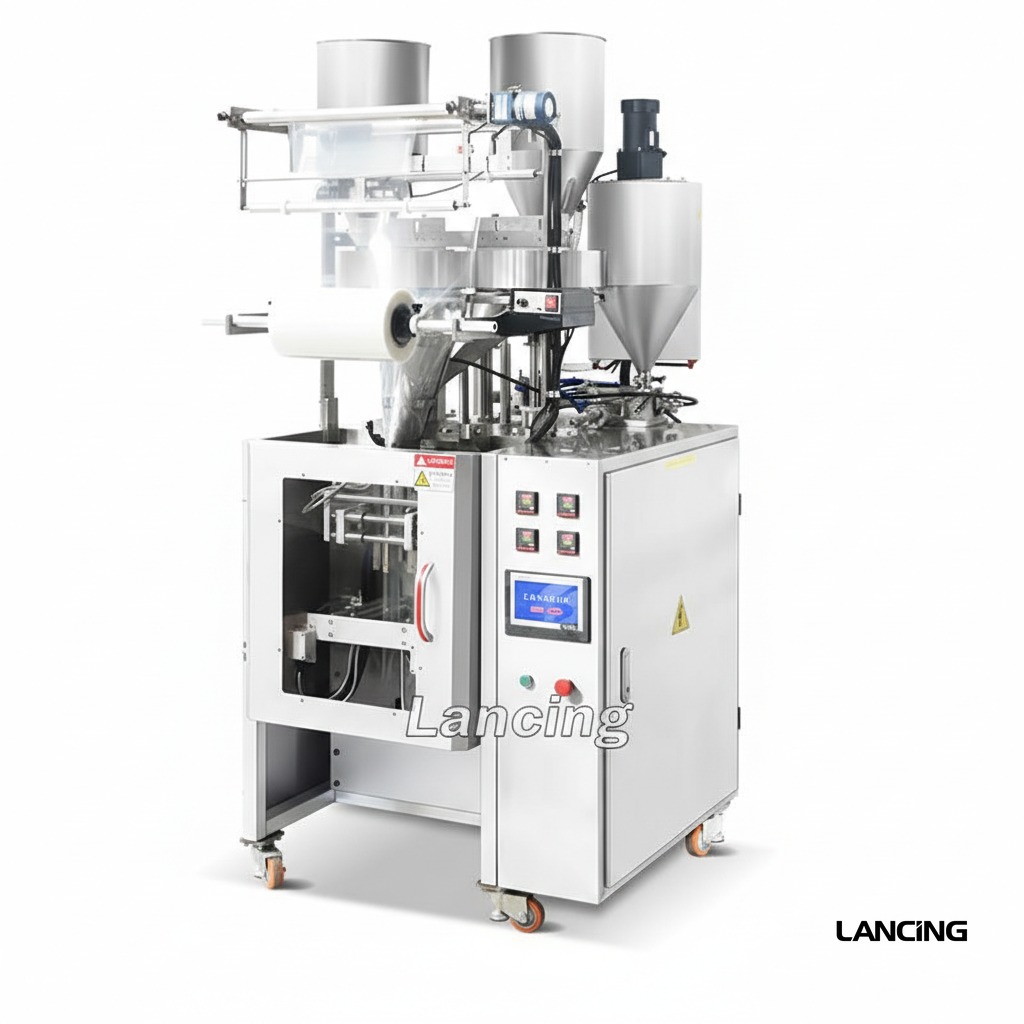
A VFFS machine forms a pack from reel material, doses the product and seals the pack in one sequence. The forming set, film tracking, registration mark, dosing system and seal conditions must be matched. Compare the liquid VFFS sachet machine, automatic VFFS and compact VFFS pages.
A pre-made pouch filling machine handles a finished empty pouch rather than forming it from reel material. This may be useful for shaped or specialist pouches, but opening, presentation, product placement and final sealing must be proven with the actual pouch.
The dose must enter the pack without coating the surfaces that need to seal. Thin liquids can splash, viscous products can string and powders can create dust around the jaws. The chute or nozzle, fill timing, headspace and pack support therefore need to be assessed together. A pack that looks acceptable immediately after sealing should also be checked after cooling and normal handling.
Film suitability cannot be confirmed from dimensions alone. Supply the exact laminate or pouch, including printed material where registration is required. Seal temperature, pressure and dwell must be established for that material, and any coding position should be agreed before the artwork and pack layout are finalised.
| Project decision | VFFS route | Pre-made pouch route |
|---|---|---|
| Pack supply | Pack is formed from reel material on the machine. | Finished empty pouches are presented to the machine. |
| Format definition | Forming parts, film width and cut length define the pack. | Pouch dimensions, opening behaviour and presentation are critical. |
| Dosing | Liquid, paste, auger or weigh dosing is integrated with the form-and-seal cycle. | Dosing is coordinated with pouch opening and support. |
| Trial focus | Film tracking, registration, dose placement and seal integrity. | Reliable pick-up, opening, filling and final sealing of the supplied pouch. |
For dry products, compare auger and weigh dosing on the powder and granule filling pages. For liquids and pastes, provide the normal operating temperature and a representative sample. Where only final closure is required, a continuous band sealer may be a different route from an integrated sachet machine.
Have the product and proposed film or pouch available? Send both together so dosing, opening and sealing can be assessed as one application.
Request a sachet machinery reviewVFFS forms the pack from reel material during the cycle, while a pre-made pouch machine handles an already manufactured pouch. The best route depends on pack style, film, output, changeover and how reliably the pouch can be opened and sealed.
Materials that look similar can seal and track differently. The supplied film or pouch confirms dimensions, stiffness, friction, print registration and the temperature, pressure and dwell needed for a reliable seal.
Liquids may splash, pastes may string and powders may create dust. The dosing system, chute or nozzle, headspace and timing must keep product away from the seal area.
Often a range is possible, but film width, cut length, forming parts, jaws, dosing range and changeover time must be reviewed for every planned size. Samples and drawings should cover the complete range.
Provide the product, dose range, pack dimensions, film or pouch samples, registration details, output target, utilities, available space and any coding or downstream handling requirements.
Sachet filling project resources
Sachet machinery should be specified from the product condition, dose, film structure, pack geometry, seal requirement, coding and presentation—not sachet size alone.
Provide the actual liquid, paste, powder or granule and production film or pre-made sachet material. Define finished dimensions, seal layout, tear features, registration, code area and the approved pack. Identify how product can contaminate the seal and what test confirms an acceptable result.
Compare integrated form-fill-seal with pre-made pouch or separate filling/sealing routes where format flexibility, product handling or presentation differs. Include cleaning, material recovery, reel or pouch change, first-off release and downstream counting or cartoning.
Compare VFFS, pre-made pouch and other seal routes.
Choose the product feed and dosing principle.
Plan product, material and acceptance evidence.
Ready to discuss the application?
Send the application details to Lancing for a tailored machinery review.
Sachet material and quantity-control detail
A sachet project should connect product dosing, web construction, print registration, seal contamination risk, cut, code and the packer's quantity-control method. Use production-equivalent film and product at the difficult condition.
© Copyright 2025 by Lancing Ltd - all right reserved terms & conditions