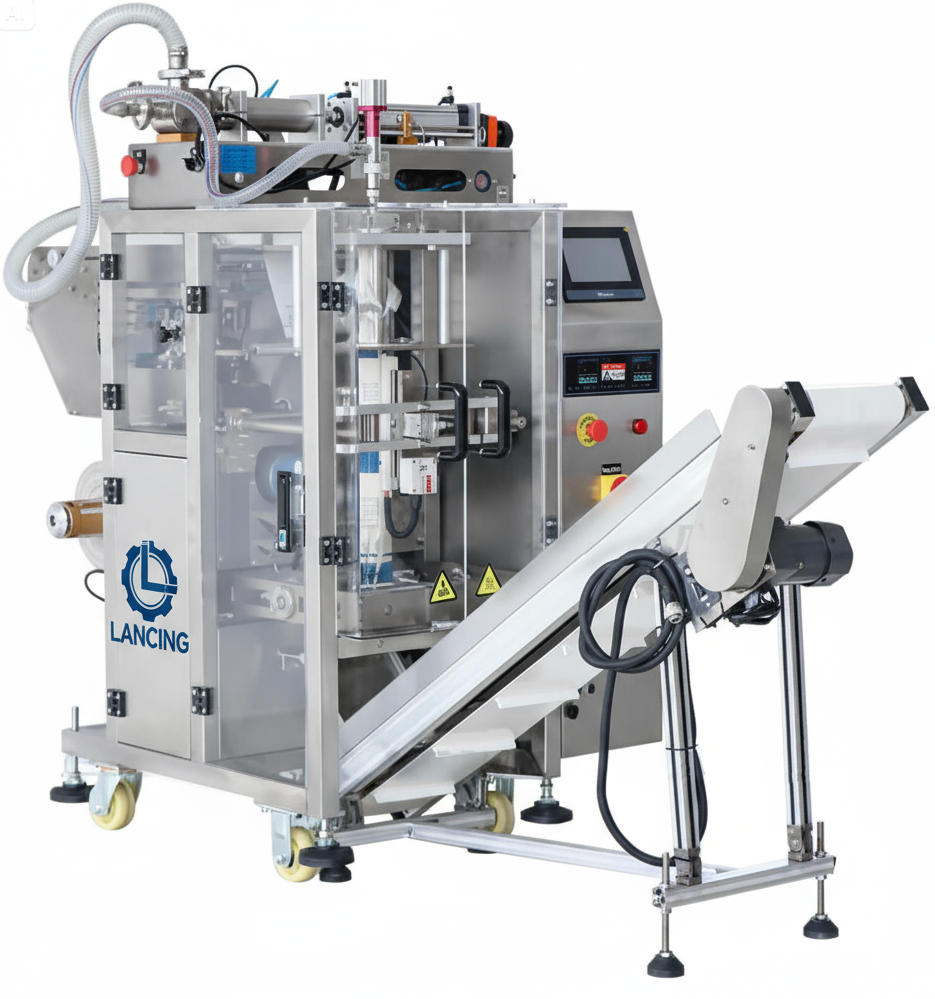
Powder and granule filling guide
Compare dosing principles against material behaviour.

Dry-product filling
Powders and granules cannot be grouped by appearance alone. Flowability, bulk density, particle size, cohesion, aeration, dust and product fragility determine how consistently a product can be presented to the dosing system and discharged into the pack.
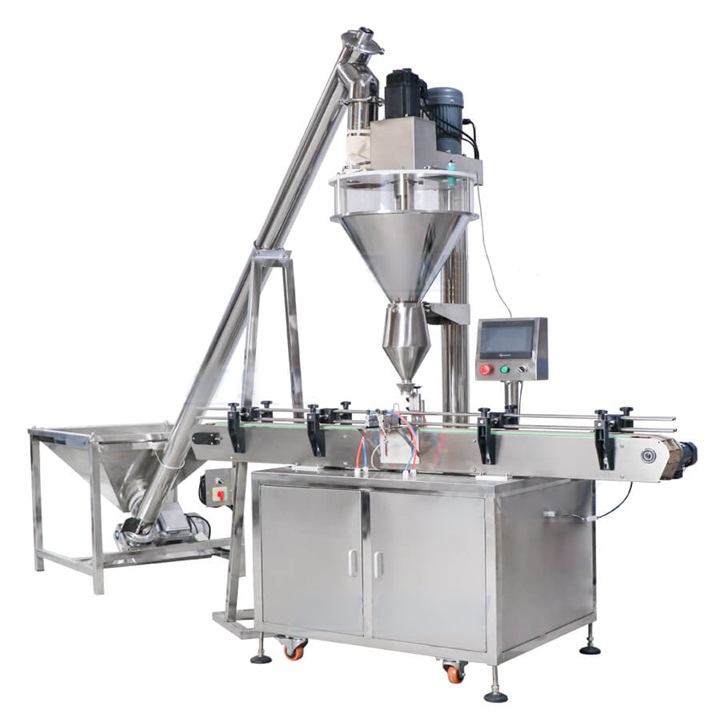
An automatic auger filler meters product through a screw in the hopper. It is commonly considered for fine powders and other products that can be controlled by screw revolutions. Screw geometry, hopper agitation, fill range and product density must be matched to the sample.
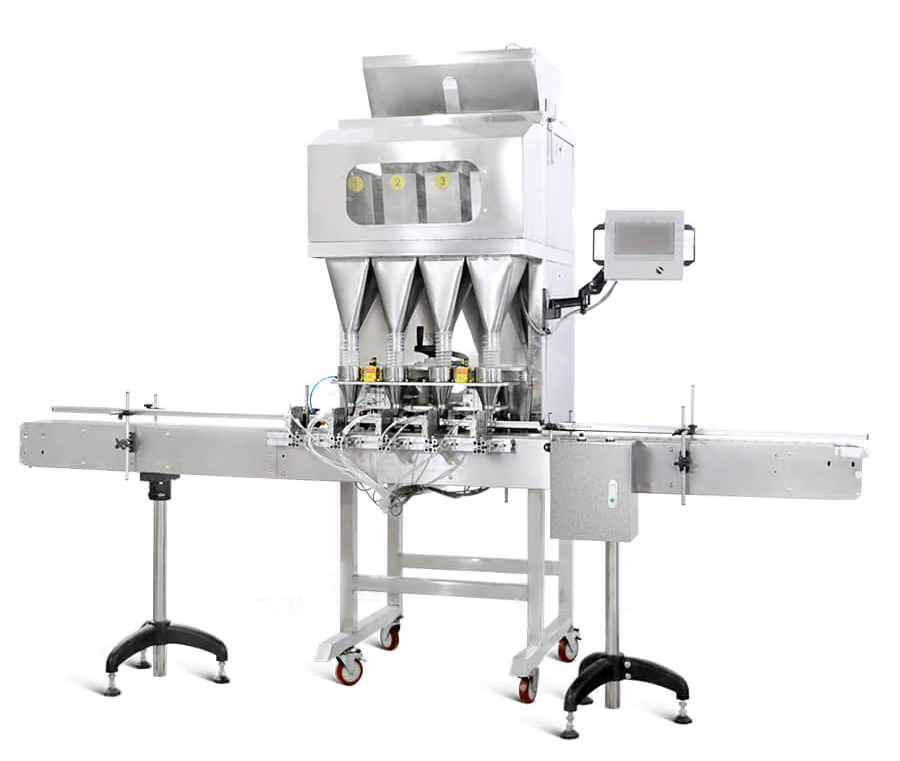
Weigh systems measure product mass and can suit free-flowing granules, pieces and some powders. The feeder must deliver quickly and then finish accurately without excessive product in flight. See the weight filling range for related options.
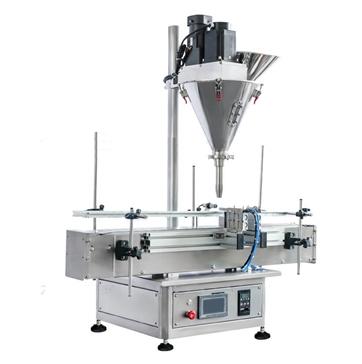
Compact auger and semi-automatic powder filling machines can suit shorter runs or operator-presented packs. The required labour, dust management, pack support and refill method should be considered alongside the purchase price.
A powder may bridge above the auger, compact as the hopper empties or become aerated during transfer. A granule may bounce, segregate by particle size or fracture if handled aggressively. These effects influence fill consistency and can change after the machine has run for a period, so a trial should include repeated cycles and normal hopper refilling rather than a single demonstration dose.
The pack opening must also accept the discharge without product collecting in the seal or on the container rim. For bottles and jars, check the neck diameter and stability. For bags and pouches, confirm the mouth width, support method and whether the pack is formed on the machine or presented pre-made.
| Selection variable | What to record | Why it matters |
|---|---|---|
| Flowability and cohesion | Does the product pour freely, bridge, smear or cling? | Influences hopper design, agitation and whether auger or weigh dosing is practical. |
| Bulk density | Loose and settled density where available. | Affects the volume occupied by a target weight and the tooling needed for the range. |
| Particle size and fragility | Smallest and largest pieces, fines and breakage sensitivity. | Helps avoid trapping, crushing, segregation and inconsistent feed. |
| Dust and product contact | Dust level, cleaning method and material restrictions. | Defines extraction, guarding, access and the parts that need routine cleaning. |
| Pack format | Opening, height, stability and required headspace. | Controls nozzle/chute size, pack support and downstream sealing or capping. |
Confirm how product reaches the hopper, how the hopper is emptied and how tooling is removed for cleaning. Where several products are planned, include the fastest and slowest flowing samples and the complete fill range. Downstream equipment may include a VFFS machine, bag or pouch sealer, capper, labeller, coder or checkweigher.
For quotation, send the product sample, target weight or volume, pack samples, required output, batch size, available headroom and floor space, utilities and cleaning expectations. Lancing can then compare the dosing principle and automation level without relying on unsupported catalogue assumptions.
Dry product behaving differently from one batch to another? Include samples from the expected range so flow and density variation can be assessed.
Discuss powder or granule fillingAn auger filler is commonly considered for powders and fine products that can be metered consistently by a screw. The product sample, bulk density, fill range and pack opening are needed to select suitable tooling.
Weigh filling may be preferable for free-flowing granules, pieces or products where mass is the primary target. Product flow, fragility, feeder response and the required cycle still need to be tested.
Bulk density affects how much volume a given product weight occupies. Changes caused by aeration, settling or batch variation can influence volumetric dosing and the size of the hopper, screw or pack.
Identify how dusty the product is during transfer and filling, how it is cleaned and whether extraction or enclosed handling is required. A sample trial shows where dust is generated around the discharge and pack.
Provide representative product, every pack size, target fills, expected tolerance, batch information and enough material to run repeated cycles including normal hopper refill and changeover conditions.
Powder and granule project resources
The same target weight can require a different feed principle when the product is cohesive, dusty, fragile, free-flowing, aerated or variable in bulk condition.
Supply a representative bulk quantity plus information about transport, storage and operating humidity. Define particles, fines, dust, compaction, segregation, bridge or flood tendency and damage limits. Include the complete pack range, opening, headspace, tare variability and the accepted weight-check method.
The filling selection and trial guides help compare an auger, vibratory feeder or weight-controlled route without treating general guidance as a model guarantee. Include hopper loading, extraction or containment, material recovery and clean-down in the project brief.
Compare dosing principles against material behaviour.
Plan sample quantity, conditioning and measurement.
Control retained material, parts and first-off release.
Ready to discuss the application?
Send the application details to Lancing for a tailored machinery review.
© Copyright 2025 by Lancing Ltd - all right reserved terms & conditions