Filling method selection
Compare weight control with volumetric, auger and pump routes.

Fill-by-weight machinery
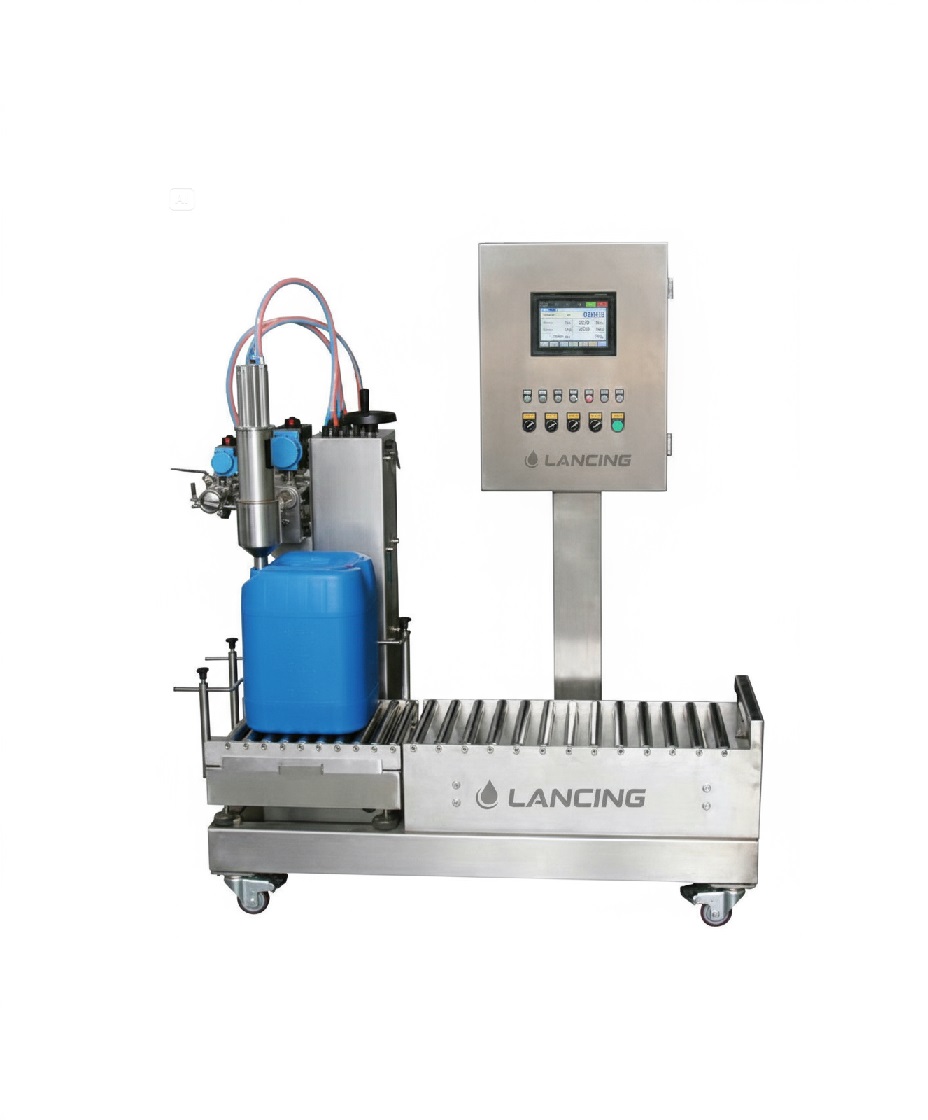
Weight filling measures the product against a target mass rather than relying only on a fixed volume or timed flow. It can be useful when density varies, larger fills are involved or the declared pack quantity is naturally specified by weight. The feed system and the way it slows and stops are central to repeatability.
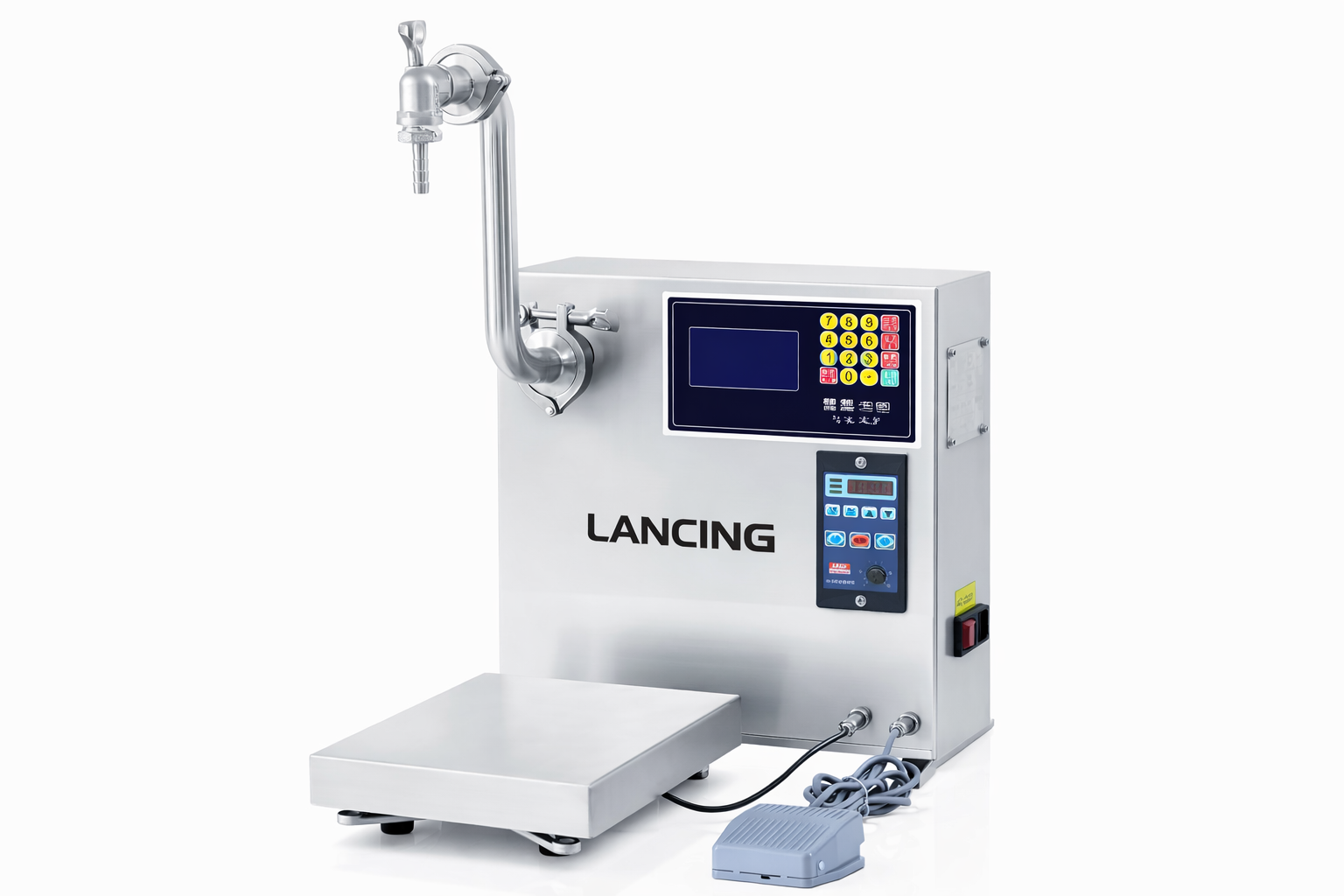
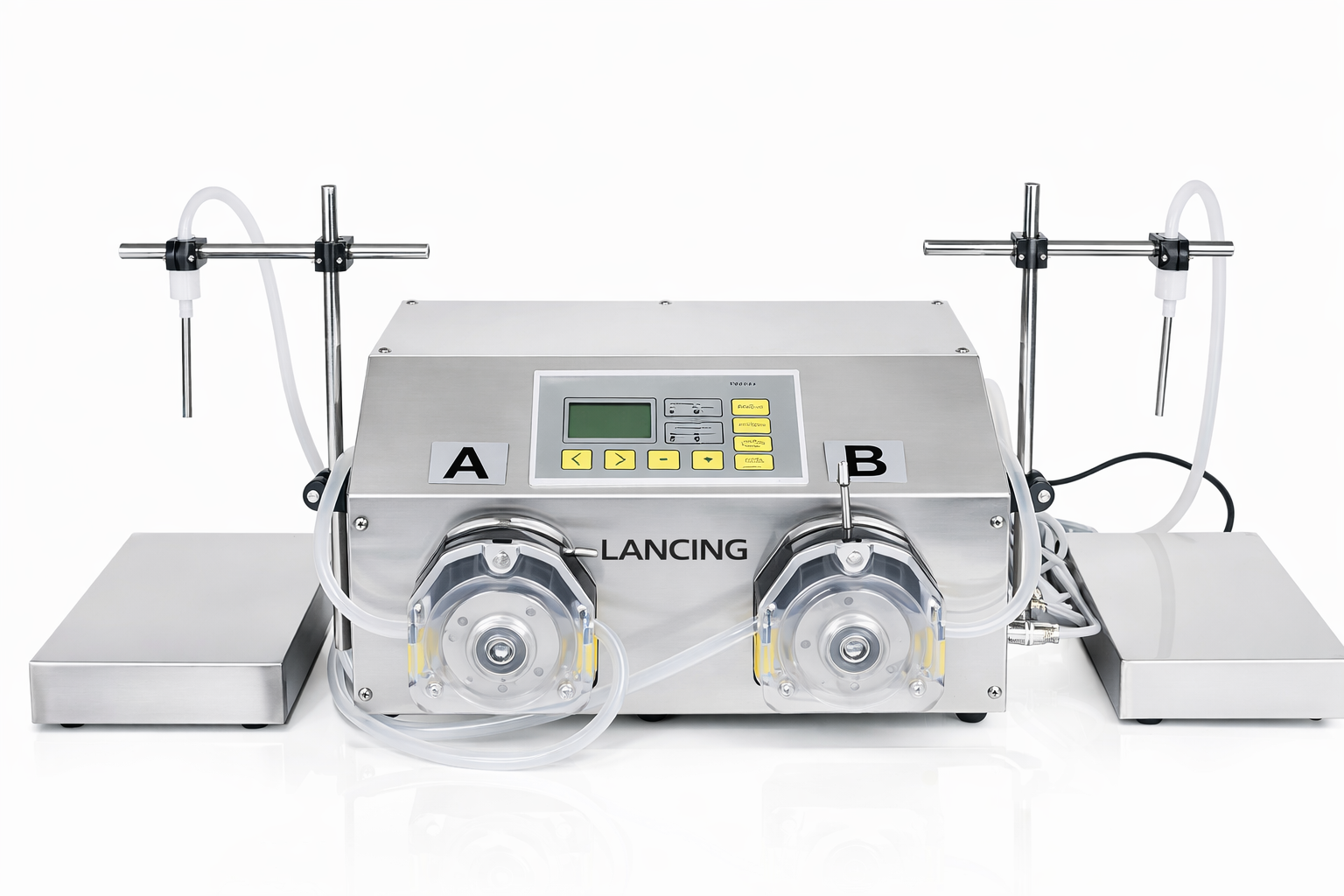
A liquid can be delivered to a container on a load cell by a suitable pump or valve arrangement. The control strategy normally needs a fast feed followed by a slower finishing stage so that product already in flight does not carry the fill beyond the target. Flow consistency, foaming and drip control remain important.
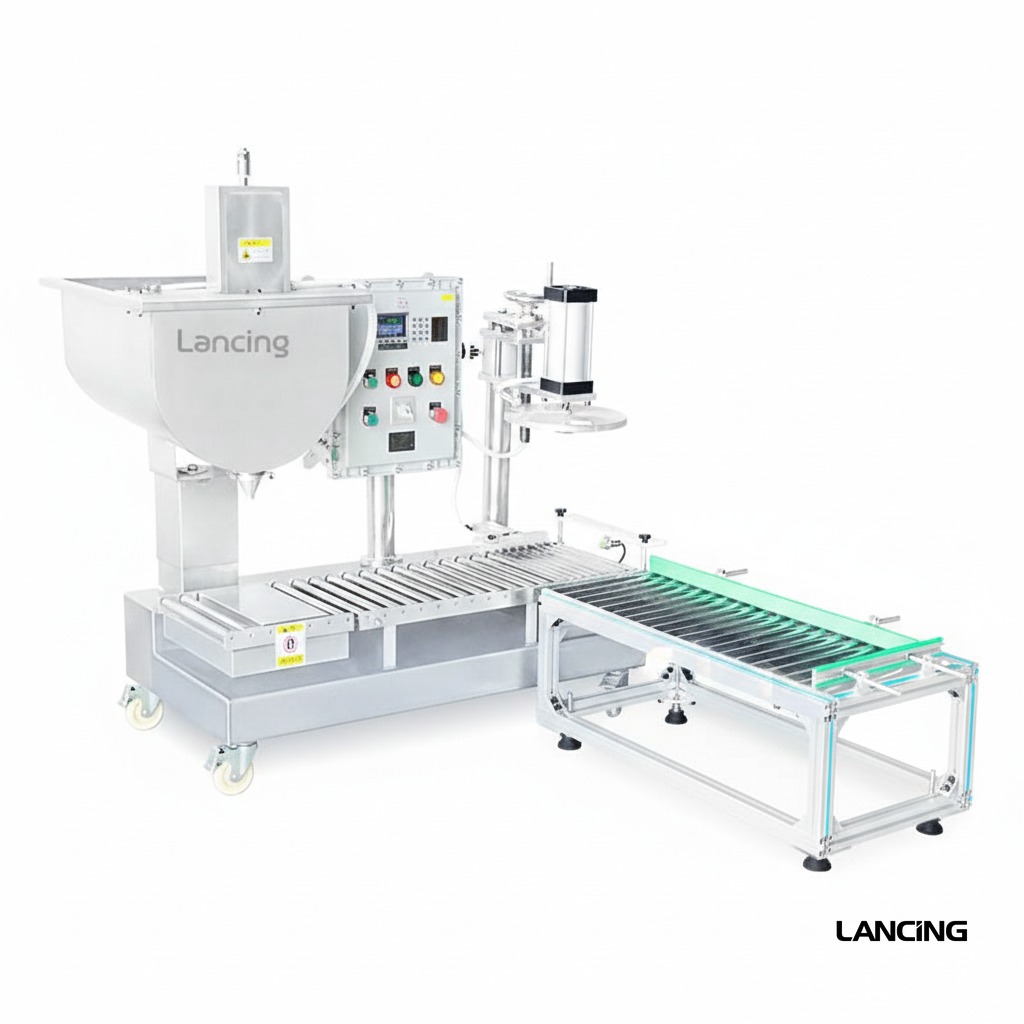
Dry products may be fed by vibration, screw, belt or another controlled route depending on flowability and particle size. Fine cohesive powders behave differently from seeds, pellets or irregular pieces, so the powder and granule filling range should be compared using an actual sample.
The scale must see the container and product without disturbance. Conveyor vibration, contact with guide rails, hoses pulling on a moving platform and product continuing to fall after the feed signal stops can all affect the cycle. The empty-container tare also matters where container weight varies. The proposed sequence should therefore be tested with the real pack, not only with a calibration weight.
For semi-automatic operation, the operator must be able to place and remove containers consistently without slowing the process or disturbing the reading. For an automatic line, container spacing, clamping or indexing, reject logic and the interface to upstream and downstream conveyors must be defined as part of the project.
| Product behaviour | Feed consideration | Trial focus |
|---|---|---|
| Free-flowing liquid | Pump or valve response, fast and fine feed, drip cut-off. | Settling time, foam, residual flow and container stability. |
| Viscous liquid or paste | Positive product movement and controlled shut-off may be required. | Temperature, stringing, nozzle cut-off and cleaning access. |
| Fine or cohesive powder | Consistent product presentation and dust control are important. | Bridging, aeration, product in flight and repeatability after refill. |
| Granules or pieces | Feed rate must reduce without damaging or trapping the product. | Particle variation, bounce, breakage and final top-up behaviour. |
Compare the semi-automatic bucket filling, peristaltic weigh filling, ATEX weigh filling and automatic granule weigh filling pages, then provide the same sample and pack information for each shortlisted route.
Need to confirm whether weight or volume is the better basis? Send the product, target weight and empty container for an application review.
Request weight-filling adviceWeight filling measures mass on a scale, while volumetric filling meters a set volume. The better choice depends on product behaviour, pack declaration, fill range, output and the way the product can be fed and stopped.
It can. A tare step or another control method may be needed when empty containers vary enough to influence the required net product weight. Representative empty containers should be included in a trial.
A fast stage moves most of the product efficiently, while a slower finishing stage approaches the target with less product in flight. The exact sequence depends on the product and feeder.
Yes, provided the weighing station is isolated from unwanted contact and vibration and the container is positioned consistently. Infeed, indexing, discharge and reject signals must be planned together.
Supply the actual product, empty containers or bags, the target weights, the expected tolerance and enough material to test refilling, settling and repeat cycles across the intended range.
Fill-by-weight project resources
Weight filling should be evaluated as a complete feed-and-measurement system, including pack stability, tare variation, cut-off behaviour and the method used to approve results.
Provide the normal and extreme fill, product condition and every container or pouch format. State whether the control target is gross or net, how tare is established and how the production result will be checked. Stable support, vibration isolation, product settling and residual flow after cut-off can affect the measurement.
For liquids, powders or granules, identify the feed principle and the change between coarse and fine delivery. The trial should include refill conditions, repeated stops and the least stable pack. Separate the machine’s indicated value from the independent acceptance measurement used by the site.
Compare weight control with volumetric, auger and pump routes.
Define tare, checks and retained evidence.
Understand how pack handling, feed and controls affect scope.
Ready to discuss the application?
Send the application details to Lancing for a tailored machinery review.
Weight filling and packaged-goods control
A fill-by-weight machine controls a dosing result using a weighing system, but packaged-goods compliance also depends on tare, sampling or every-pack checking, suitable equipment, records and the packer's chosen minimum or average system. Those responsibilities should be defined before FAT criteria are written.
Review minimum and average systems, equipment, records and line interfaces.
Define pack weight, stability and dimensional variation.
Separate product, feed, weighing, timing and measurement effects.
Consider two hypothetical filled containers, each with a gross weight of 1,100 g. The first empty container weighs 100 g and therefore contains 1,000 g of product. The second empty container weighs 110 g and contains 990 g. This arithmetic example shows why packaging tare matters; it is not a legal quantity limit, recommended production setting or machine performance claim. The responsible packer must define its actual quantity-control method and acceptance criteria. Use approved production containers when assessing how tare is established in the proposed filling sequence.
State whether each container is tared before filling, whether an agreed nominal tare is used or whether another method applies. Identify when the filled reading is taken and whether guides, hoses or handling equipment can load the weighing platform. A separate finished-pack check should use the agreed method and equipment, with its result distinguished from the filler display. If two readings disagree, retain the sample identity, tare basis and measurement conditions before adjusting the process. Otherwise an apparent filling problem may actually be a difference in what was measured.
Provide a representative range of empty containers and identify the normal and difficult products. Test the agreed filling sequence through startup, steady running, replenishment and restart. Keep individual gross, tare and net results where the acceptance method requires them, together with settings and any intervention. For multiple formats, establish which tare and recipe choices belong to each pack. The useful comparison is accepted product quantity and complete-pack output under a controlled method, not how closely a single gross reading happens to match the desired number.
Weight-filling selection
Weight control is useful only when the weighing sequence, tare, vibration, product in flight and acceptance method are defined. It should not be confused with a checkweigher that measures the pack after the fill is complete.
Compare the two control bases and the evidence each requires.
Review a weight-filling product page for bottled granules.
Include weighing, settling and refill time in the line-duty requirement.
© Copyright 2025 by Lancing Ltd - all right reserved terms & conditions