Labelling machine selection
Compare wrap, front-and-back, top, flat and print-and-apply applications.

High‑speed wrap‑around labeling for round bottles. LUB700 uses a rotary electric clamping mechanism to shorten infeed/outfeed time, achieving up to ~6,000 bottles/hour (label dependent) with precise placement.
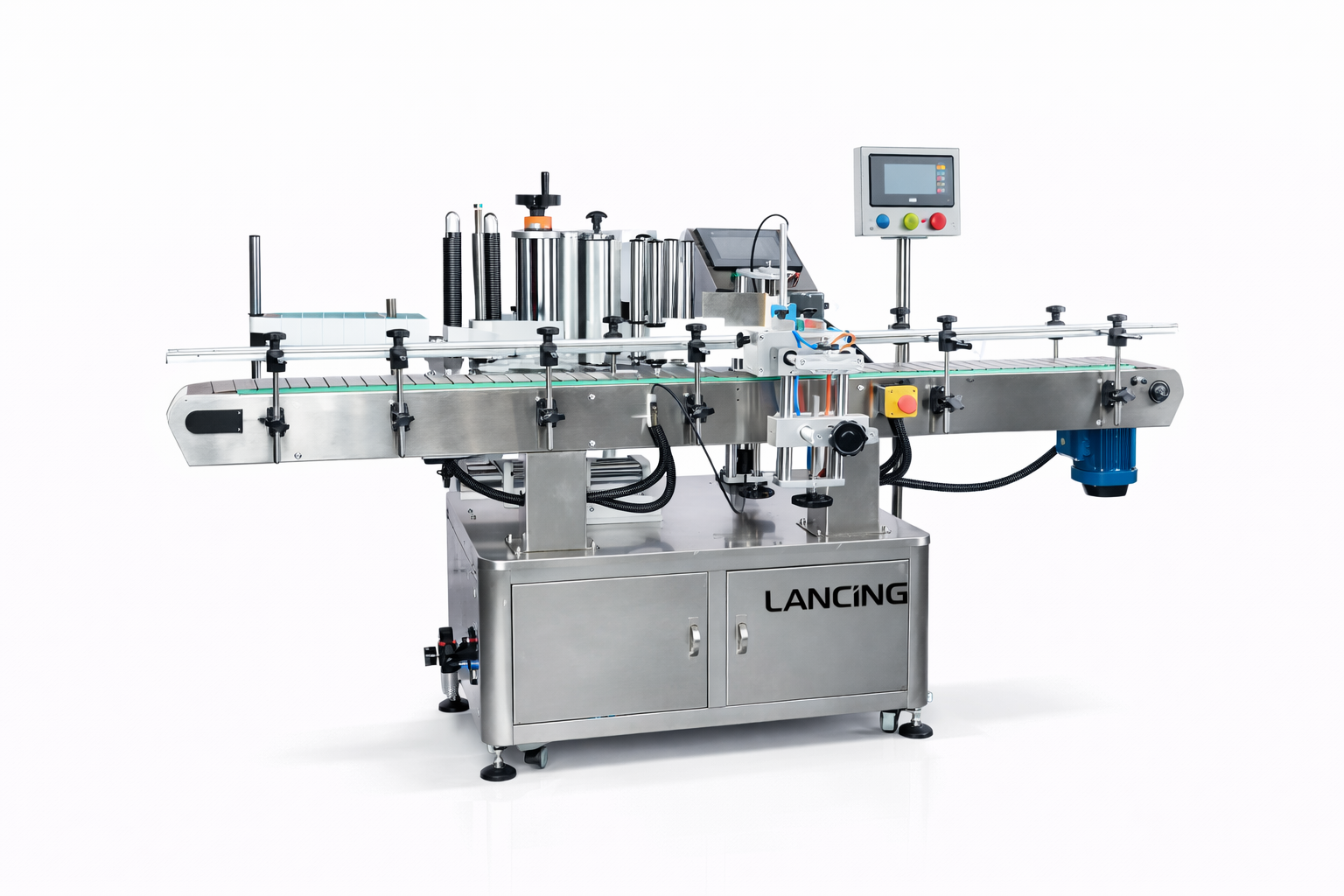
Fast infeed/outfeed compared with pneumatic systems.
Drive‑synchronised dispense for wrinkle‑free labels.
Recipe storage for size changes.
Transparent‑label sensor and code reader options.
Sync to upstream/downstream via encoder.
Rollers and guides for container diameters.
Bottles, trays and packs with retail‑ready presentation.
Flat cartons, jars and bottles with clear brand placement.
Precise labels on vials, bottles and cartons.
Tell us about your products and line requirements. We’ll confirm compatibility and quote the best configuration.
Application and selection guidance
The LUB700 is shown for high-speed wrap-around labelling of round bottles and cans. Container geometry, label stock, surface condition and product control determine whether the reference throughput can be achieved.
Taper, mould seams, shoulders and diameter variation can change the way a container rotates. Supply filled or production-weight samples so the rotary clamping and wrap station can be assessed realistically.
The label must follow the surface without creating a step, wrinkle or excessive overlap.
Provide finished labels with the intended adhesive, liner, core, roll direction and outside diameter. Transparent labels may need the clear-label sensor option listed on the page.
Label length, gap and stiffness affect dispense and wrap at high speed.
The page states up to approximately 6,000 bottles per hour, label dependent. That rate also depends on bottle pitch, container stability, label length, web handling and upstream/downstream transfer. Confirm a sustainable rate with the production pack.
Recipe storage can support repeated format changes, but guides, rollers and sensor positions still need physical adjustment. A format schedule should identify the normal products and the most demanding changeover.
The labeller can be coordinated with upstream filling and capping through conveyor and encoder signals. If coding or code reading is required, define the data position, print technology and reject response. For flat or two-panel packs, compare front-and-back labelling; for variable case labels, see print and apply.
Test the actual container and finished label together at the intended line rate.
Request a wrap-labelling reviewSome taper can be managed, but significant taper changes label geometry and wrap behaviour. The production bottle and label should be tested before specification.
No. The page identifies the rate as label dependent. Container pitch, label length, web handling and transfers also affect output.
A transparent-label sensor option is listed. The actual clear face stock and liner should be supplied for detection testing.
Overlap is a pack-design decision influenced by label length, diameter variation and appearance. It should be shown on the label drawing and confirmed from samples.
A coder can be considered where there is suitable web travel or applied-label area. The code position, data, substrate and line speed must be defined.
Wrap-around labelling resources
A round pack may still have taper, ovality, seams, mould variation or a recessed label panel. These features influence product rotation, web presentation and label wipe-down.
Supply filled production containers and wound label rolls showing face stock, adhesive, liner, gap, roll direction and any transparent section. Define the target position from a measurable container datum and identify any acceptable variation. Where labels carry variable information, include the print window, trigger point and verification requirement in the same trial.
Observe container spacing, stability and surface condition at realistic line speed. The test should include stops, restart, roll change and the least stable format. If packs are oval, tapered, soft or need multiple labels, compare another application method rather than forcing a conventional wrap-around process.
Compare wrap, front-and-back, top, flat and print-and-apply applications.
Plan variable data, verification, tracking and reject response.
Supply wound rolls, filled packs and measurable placement criteria.
Ready to discuss the application?
Send the application details to Lancing for a tailored machinery review.
Wrap-around labelling component detail
Supply containers across normal dimensional tolerance and complete label rolls with the final liner, adhesive, unwind direction and print-to-cut relationship. Define whether the label must register to a cap, seam or existing print and how the finished position will be measured.
Alternative label process
A wrap-around pressure-sensitive label can suit a stable label path without a shrink tunnel; a sleeve can suit a different decoration area or pack profile. Compare material supply, application surface, heat process and finished appearance using production samples.
Compare adhesive application with sleeve placement and shrinking.
Compare pressure-sensitive label layouts.
Confirm roll direction, pitch, adhesive and registration.
© Copyright 2025 by Lancing Ltd - all right reserved terms & conditions