Wrapping and sealing selection
Compare flow wrapping with shrink, L-seal, VFFS, pouch and band sealing.

Automatic horizontal flow‑wrapping for single items and multipacks. Feeds, wraps and seals in one continuous motion with PLC touchscreen control, automatic film feed and photo‑eye registration. Ideal for food, cosmetics and daily products; integrates with upstream handling and downstream cartoning.
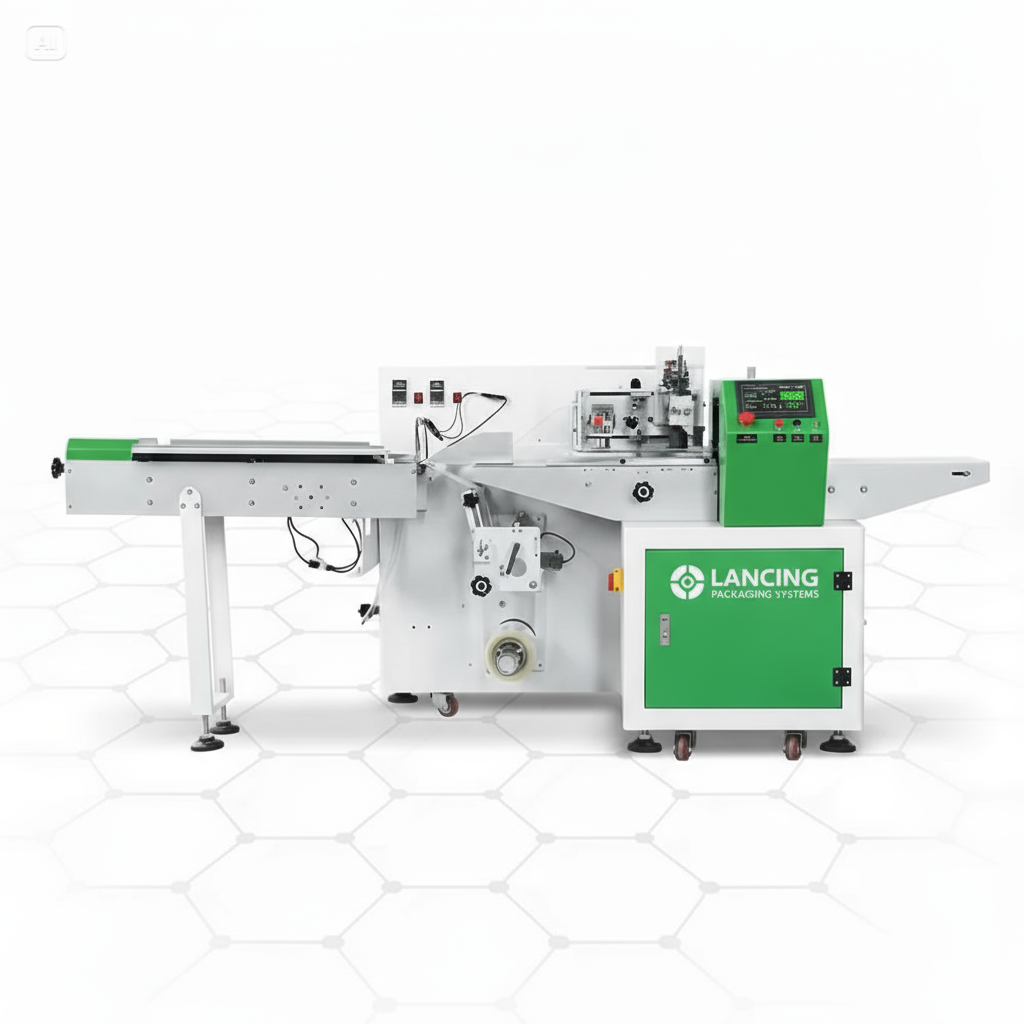
User‑friendly HMI with independent heat controls for stable sealing.
Automatically feeds film and measures bag length for fast changeovers.
Detects print marks and product presence to keep seals and graphics aligned.
Runs OPP, OPP/CPP, KOP/CPP, aluminum composite films and bubble wrap.
Approx. 3836 × 890 × 1079 mm — easy to integrate on existing lines.
Middle side seal with top end seals for attractive “pillow” packs.
Specifications based on the LUZB350X datasheet and may change without notice.
Biscuits, cookies, snack bars, candy, marshmallows.
Soaps, cosmetic kits, sachet multipacks.
Sponges, filters, small tools and components.
Tell us about your products and line requirements. We’ll confirm compatibility and quote the best configuration.
Application and selection guidance
The LUZB350X is shown as a horizontal wrapper for individual products and multipacks. The quoted machine range only becomes meaningful when the product dimensions, infeed pitch, film and seal position are defined.
The infeed must present each product consistently so the end jaws close in the gap between packs. Irregular, soft or variable products may need a tailored conveyor, flight system or manual loading arrangement.
The page lists a reference rate of 30–120 bags per minute. Actual output depends on bag length, product presentation, jaw cycle, film and downstream handling.
The page identifies a maximum film width of 350 mm, bag widths of 30–160 mm and product height up to 55 mm. These are model references, not a substitute for a formed-pack calculation using the actual product.
The longitudinal and end seals must clear the product and meet the required appearance and integrity.
For printed film, supply the roll and artwork repeat so the photo-eye registration can be tested. Film tension, tracking and the registration mark influence graphic position relative to the end seal.
List the complete product range, not only maximum dimensions. Changeover can involve guides, former, film reel, bag length, jaw timing and temperature recipes. If date or batch coding is required, identify the print area and dwell available on the moving film.
Flow wrapping is suited to a closely formed pillow-style pack with controlled end seals. For grouped transit bundles or products needing a loose shrink envelope, review shrink wrapping. For bags formed vertically around a dosed loose product, review VFFS machinery.
Confirm a realistic infeed and bag calculation using the production product and film.
Request a flow-wrap reviewNo. Film must travel around the product and provide enough material for the longitudinal seal. The practical product size must be calculated from the full cross-section and former.
No. It is the upper end of a reference range. Bag length, product pitch, film sealing, jaw motion and feeding determine the actual rate.
The machine includes photo-eye registration, but the production film, mark, repeat and tracking must be tested to confirm the finished graphic position.
Manual loading can be considered when the operator can present products safely and consistently at the required pitch. Higher or variable rates may need an automatic infeed.
Correct product spacing, flat film, suitable temperature, pressure and dwell, and a seal area free from product are all required.
Flow-wrapper project resources
A horizontal flow wrapper should be trialled with the actual product feed and production film. Product spacing and film behaviour are part of the machine application, not separate assumptions.
Provide every product format, orientation and approved finished pack, including fragile, irregular or multipack arrangements. Supply production reels with material structure, width, thickness, core, maximum reel, print registration and winding direction. Identify acceptable fin-seal and end-seal positions, code area and any product-free seal zone.
Use enough product and film to thread the machine, stabilise temperatures, test registration, observe repeated starts and run a sustained evidence sequence. Define how upstream equipment presents pitch and how downstream conveyors protect the fresh seals. Products that cannot be spaced or tolerate jaw timing may require another wrapping or pouch process.
Compare flow wrapping with shrink, L-seal, VFFS, pouch and band sealing.
Coordinate registration, code trigger, verification and rejection.
Define pitch, blocked/starved status and protected discharge.
Ready to discuss the application?
Send the application details to Lancing for a tailored machinery review.
Flow-wrapper product and film detail
Use production products and film to confirm infeed spacing, registration, fin and end seals, cut position and recovery after gaps or stops. Manual and automatic loading create different timing and accumulation requirements and should be identified in the project scope.
© Copyright 2025 by Lancing Ltd - all right reserved terms & conditions